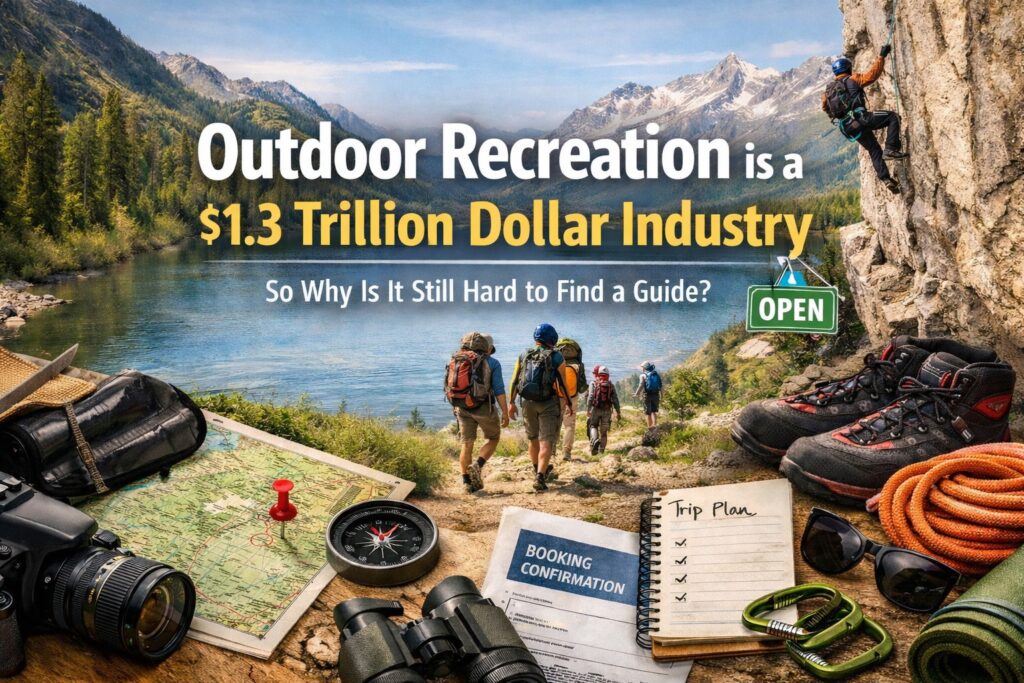
The outdoor industry in the U.S. is bigger than most people realize.
According to the U.S. Bureau of Economic Analysis, outdoor recreation generated $1.3 trillion* in economic output in 2024, contributing $696.7 billion to U.S. GDP (2.4%) and supporting over 5 million jobs.
That puts it ahead of industries like agriculture and mining.
At the same time, participation keeps growing—more people are searching for things like:
- guided hikes
- climbing trips
- kayak rentals
- outdoor tours near me
But even with that growth, actually finding a quality outdoor experience is still harder than it should be.
The Discovery Problem in Outdoor Recreation
If you’ve ever tried to book a last-minute outdoor activity—whether it’s a mountain guide, bike tour, or fishing charter—you’ve probably run into the same issue:
- Scattered websites
- Outdated information
- Limited visibility for smaller operators
There’s no consistent place to browse outdoor activities near you and see what’s actually available.
So people default to what they already know—or give up entirely.
For Outdoor Businesses, Visibility Is the Bottleneck
On the other side, most outdoor recreation businesses don’t have a demand problem—they have a distribution problem.
Many guides and outfitters rely on:
- word of mouth
- repeat customers
- seasonal traffic
Meanwhile, empty slots on trips go unfilled simply because the right people never see them.
That’s a visibility issue, not a quality issue.
Most Spending Happens Around the Trip
One of the more important insights from the U.S. Bureau of Economic Analysis data is that over 50% of outdoor recreation value comes from supporting activities—things like travel, lodging, and trip planning.
Which makes sense.
The hardest part of getting outside usually isn’t the activity itself—it’s figuring out:
- what to do
- where to go
- who to go with
Bridging the Gap
There’s no shortage of outdoor experiences in the U.S.
There’s a shortage of clear, centralized discovery.
- People want easier ways to find outdoor activities
- Vendors need better ways to get in front of those people
Outdoorec is built to close that gap—helping people discover things like guided outdoor trips, local outfitters, and open tour slots, while giving providers a simple way to be seen.
Final Thought
Outdoor recreation is growing fast, but it’s still fragmented.
The opportunity isn’t creating more experiences—it’s making the existing ones easier to find.
This article is written with the assistance of AI and may include errors. It is reviewed and edited by a human, but may still contain inaccuracies or omissions.
*The ~$1.3 trillion figure refers to total economic output, which captures the full scope of spending tied to outdoor recreation—not just the value added to GDP. It’s derived from the same dataset used by the U.S. Bureau of Economic Analysis in its Outdoor Recreation Satellite Account, but it includes both direct activity (like guides and rentals) and the broader ripple effects across travel, lodging, food, and transportation. While this number is widely cited by industry groups and media because it reflects the industry’s full footprint, the BEA typically emphasizes the GDP figure in its official releases, which is why the larger total output number isn’t always highlighted upfront.


